Search

International Institute for Innovation in Governance

Place as layered and segmentary commodity

8J9B0255

All over the world planners are developing novel approaches to manage urban growth in more sustainable ways, in ways more sensitive to spatial quality and to social, economic and ecological contexts. There is a widely shared understanding that the success of such approaches depends on the possibilities to integrate an almost overwhelming variety of objectives. Smart growth has emerged in recent decades as a comprehensive version of planning which can likely achieve this goal of complex coordination. Smart growth is a comprehensive version of spatial planning thatcan guide sustainable development and tackle negative social and environmental consequences of urbanization. In our paper Place as layered and segmentary commodity. Place branding, smart growth and the creation of product and value we explore how an integration of spatial planning and place branding strategies can further the concept of smart growth and improve its chance at implementation. A review of the parallel evolutions of place branding and smart growth shows their shared interest in comprehensive visions, sensitivity for narratives of place and self, and the proposed embedding in participatory governance. The concept of layered and segmentary commodification offers a novel perspective on value creation in smart growth and helps to develop new forms of smart growth, that combine and integrate elements of spatial planning and place branding.

You can download the paper from the website of International Planning Studies or from researchgate 

Water Governance in Central Asia

DSCF2090

We develop a social systems theory perspective on Central Asian post-Socialist transition, placing particular emphasis on the coordination problems in transboundary water governance. The extensive Soviet water-energy infrastructure around the Amudarya and Syrdarya rivers required coordination, but this could no longer be politically secured after the 1991 Soviet disintegration. According to the social systems theory of Niklas Luhmann, coordination problems are generally endemic to any modern regime of functional differentiation. We show that each Central Asia state had to tackle substantial internal adaptation problems, which were rendered even more formidable by the need for transboundary coordination. We further demonstrate how the new riparian states offer a complex picture of several forms of differentiation, where functional differentiation is in some ways reinforced by the new national boundaries and the collapse of Soviet planning. We identify possible sources of flexibility, opening up avenues toward adaptation and enhanced coordination across boundaries.

Nodir Djanibekov, Kristof Van Assche & Vladislav Valentinov (2015) Water Governance in Central Asia: A Luhmannian Perspective. Society & Natural Resources: An International Journal. Online first: http://dx.doi.org/10.1080/08941920.2015.1086460

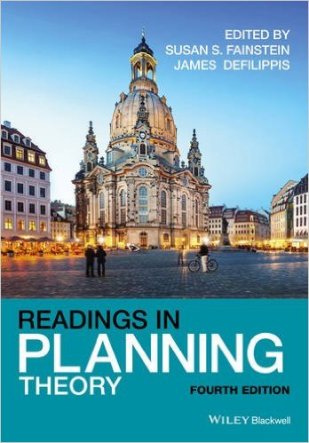
Readings in Planning Theory

readingsplanningtheory

The fourth edition of Readings in Planning Theory brings together the essential classic and cutting-edge readings in planning theory. It introduces and defines key debates in planning theory with editorial materials and readings selected both for their accessibility and importance The book is edited by Susan Fainstein and James DeFilippis.

This 4th edition is the best-available compendium and analysis of planning theory. Remarkably, the editors manage to retain many of the foundational readings while also producing a volume that is overwhelmingly grounded in new scholarship. This expands the canon to show how theory can be inspired and produced by practitioners and scholars engaged with far more than the United States and Europe” (Lawrence J. Vale, Massachusetts Institute of Technology)

Part of book the are available via googlebooks

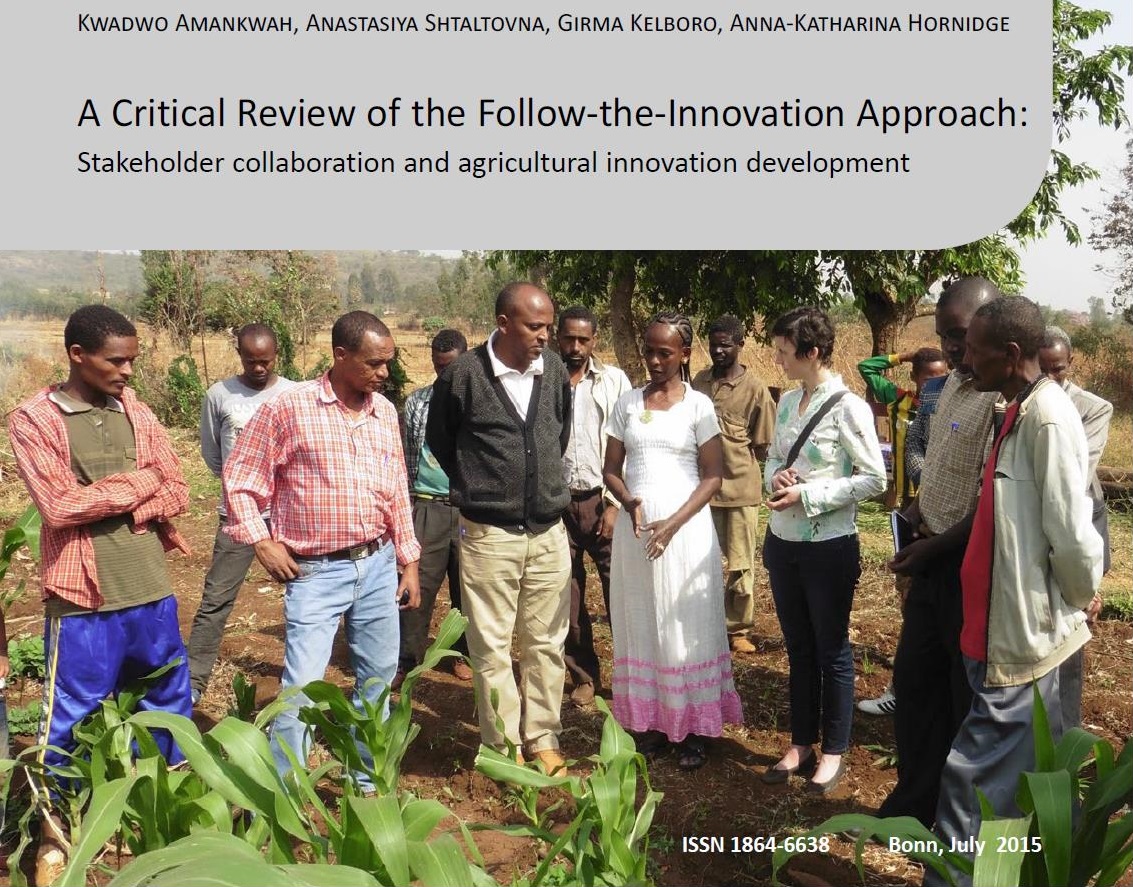
A Critical Review of the Follow‐the‐Innovation Approach

pic3

Kwadwo Amankwah, Anastasiya Shtaltovna, Girma Kelboro, Anna-Katharina Hornidge

Technological innovations have driven economic development and improvement in living conditions throughout history. However, the majority of smallholder farmers in sub‐Saharan Africa have seldom adopted or used science‐based technological innovations. Consequently, several scholars have been persistently questioning the effectiveness of intervention models in smallholder agriculture. Following the agricultural innovation systems framework (AIS), this paper reviews a participatory framework known as the ‘Follow the Innovation’ (FTI) approach, which was developed in the research project ‘Economic and Ecological Restructuring of Land and Water Use in Khorezm’ (2001 ‐ 2012) and employed in an ongoing BiomassWeb project ‘Improving food security in Africa through increased system productivity of biomass‐based value webs’ (2013 ‐ 2018). The FTI approach claims that multi‐stakeholder interactions and the adaptation of ‘innovation packages’ or ‘plausible promises’ are crucial for innovation development. While appreciating the crucial role such packages play in agricultural development, the review at hand calls for a shift from defining agricultural innovation as a package or new technology to the consensus that it is an outcome of the collaborative or collegiate participation of multi‐stakeholders in planning and implementation processes, by generating and combining scientific and local perspectives on technical and non‐technical changes over time and in space, and the reconfiguration or adaptation of embedded informal and formal institutions. This broader definition requires scientists, extensionists, local communities and other stakeholders to perform these key tasks jointly by: 1) constituting a collaborative transdisciplinary and stakeholder dialogue group (or innovation platform) for innovation development, 2) undertaking a broad system diagnosis, to understand opportunities and challenges as well as stakeholders’ claims or points of view and their underlying reasons, 3) identifying shared purposes and forging the accommodation of points of view through dialogue and deliberations among relevant stakeholders, 4) developing joint technical and non‐technical solutions, by creating and maintaining linkages or networks to address problems identified and prioritised through stakeholder interaction processes, and 5) guiding the participatory monitoring and evaluation of stakeholders’ practices and processes in relation to responsiveness. The processes of innovation development and practical applications are intertwined with recognising the contextual nature of these processes, and adaptive approaches are therefore integral parts thereof. Salient implications of this review are highlighted for transdisciplinary research (such as in the BiomassWeb project) aiming at agricultural innovation development in complex environments.

Download the publication A Critical Review of the Follow‐the‐Innovation Approach: Stakeholder collaboration and agricultural innovation development

Conflicts. An Evolutionary Governance Perspective

conflict

No governance without conflicts. Time for the EGT project to explore the roles of conflicts in governance.

Based on insights from Actor-Network Theory (ANT) and Systems Theory, we conceptualise conflicts as self-referential modes of ordering. Like any mode of ordering, conflicts can disappear or get resolved, yet they have a tendency to endure. If they endure, they can become (temporarily) stabilised. In this paper we argue that conflicts can only be understood if one takes into account the history of their emergence and understands them as subject to path dependencies. Through our reconceptualization of conflicts in an Evolutionary Governance Framework, we stress that any attempt to manage or govern conflicts paradoxically enforces them.

Pellis, A., Duineveld, M., & Wagner, L. (2015). Conflicts forever. The path dependencies of tourism conflicts: the case of Anabeb Conservancy, Namibia, . In G. T. Jóhannesson, C. Ren, & R. van der Duim (Eds.), Tourism Encounters and Controversies. Ontological politics of tourism develepment: Ashgate

Download the chapter

Innovation in local governance: towards an evolutionary model for understanding the possibilities and limitations of change

localgovernance
Raoul Beunen, Albert Aalvanger, Martijn Duineveld and Kristof Van Assche

During the IPA 2015 conference in Lille we presented a conceptual framework for understanding the evolution of local governance. Using this framework we reflect on the processes of changes in different places in the Netherlands and delineate a number of topics that have so far gained limited attention in the debates about innovation in local governance.
The attention of innovation in local governance has increased in the last years, with many actors, including national and local governments, civil society organizations, researchers, and individual citizens, advocating change. Although the motivations and assumption underlying their pleas can largely diverge, there is a strong consensus about the need to adapt institutional arrangements to fit the challenges of the 21th century. Many arguments focus on strengthening the legitimacy and inclusiveness of local governance, on improving the effectiveness of delivering public goods and services, or a combination of both. The search for new forms of local governance is given extra weight due to the budget cuts that many governments need to make. With less resources available these governments are forced to revise and delimit their role in public affairs and social welfare, something which might erode the possibilities and legitimacy of existing institutional arrangements.

Although the growing attention for innovation in local governance seems to be a recent phenomenon, we should not forget that governance has always been changing. Over time institutional frameworks need to be adjusted, to evolving internal and external conditions. One can think of the necessary adjustment of institutional frameworks to emerging societal issues or changing economic circumstances. The set of institutions designed to stabilize a community, will never perfectly fit internal and external environments at the same time, and its evolution will never be fully in sync with changes in the environment. Furthermore, even if the need to adjust institutions is observed by citizens and leadership, not every redesign is possible.

We use Evolutionary Governance Theory to understand the position and outcomes of recent attempts for innovation in local governance as part of a wider governance path. This helps delineating the possibilities and limitation for innovation. Drawing on a wide range of case studies in the Netherlands we explore how initiatives for innovation in local governance affect citizen’s and government’s views and motivations, their strategizing, their negotiations about shifting roles and responsibilities and the ways in which these are reflected in institutional frameworks.

 Afbeelding1
Recent developments in local governance in the Netherlands show that the quest for novel forms of local governance might not always be successful. Pleas for novelty can in fact delimit or prevent real innovation and reduce the potential of civil society to pick up new tasks and responsibilities. Pushing for innovation can have negative consequences when it lacks a more substantial, contextualized perspective on problems and possible alternatives, and is merely looking for something new because it is new or if it is pushed by organisations whose role in the new arrangements will be limited. ​

Productive conflicts and the formation and destruction of subjects and objects in local governance

Martijn Duineveld, Raoul Beunen, Kristof Van Assche and Arjaan Pellis

Understanding conflicts is at the core of governance studies and related disciplines, like planning and management. Conflicts are conceptualised in a large variety of ways, yet there seem to be some recurring features. Often conflicts are framed as problematic. Conflicts should be avoided, resolved, softened, or overcome. To do so they are analysed and problematized to find solutions like ‘joint collaborative arrangements between public-private partnerships’, ‘consensus making’, ‘local involvement’, ‘participatory community practices’, ‘good governance’ and ‘compensation deals’.

Contrary to the latent assumption or overt hope that conflicts can be resolved – that they are temporary, non-static ‘in betweens’ – we argue that they have a propensity to endure because they are productive self-referential and evolving social systems in governance.

In this presentation we use Evolutionary Governance Theory  (EGT) to analyse the productive roles of conflicts in three Dutch case studies on local urban governance. Contrary to many still prevailing conceptualisations of conflicts we argue they have a social life of their own, marked by different dependencies and different technologies that co-constitute them as producers of both subjects and objects.

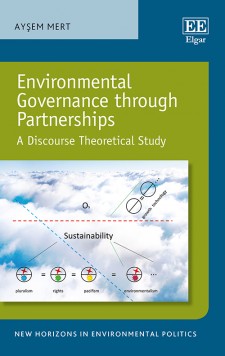
Environmental Governance through Partnerships

partnershipsTransnational partnerships have become mainstream across levels and issues of environmental governance, following their endorsement by the UN in 2002. Despite apparent success, their desirability as a way of governing human interactions with the planet’s ecosystems has not yet been properly investigated. In this revelatory book Aysem Mert combines post-structuralist discourse theory and ecocriticism to analyse three discourses that have been rooted into the logic of partnerships: privatisation of governance, sustainable development and democratic participation. Ultimately, Mert argues that these discourses help understand both the potential and structural limitations of sustainability partnerships.

EdwardElgarPublishing: Environmental governance through Partnerships

[download thesis at website VU]

On the added value of Evolutionary Governance Theory for economists

A review by economist Ming Lo of the Department of Economics, St. Cloud State University

Evolutionary Governance Theory: Theory and Applications is not an easy read for economists. Theory, when narrowly defined, is a set of statements logically connecting the assumptions to the hypotheses that can be empirically examined. Evolutionary governance theory, or EGT as Raoul Beunen, Kristof van Assche and Martijn Duineveld (the editors of the book as well as authors of some chapters) abbreviate, is neither illogical nor anti-empiricist; it nevertheless follows a tradition more philosophically continental than most economists are accustomed to. Readers who are more comfortable with a different tradition but open-minded enough will no doubt benefit from the insights from this 350-page book and the collection of articles/chapters by twenty-three scholars from different fields of studies. What follows in the rest of this review is my reflection on EGT as an economist educated in the American system”.

Read the full review review Evolutionary Governance Theory

Blog at WordPress.com.

Up ↑