10 proposals for change that, once implemented, will make the planning system less rigid and more adaptive.

> New book. Free download @ InPlanning.
> More information about Evolutionary Governance @ governancetheory.com.
Spatial planning is facing a paradox. The last decades have witnessed a growing number of scholars and professionals that criticize the possibilities of planning and who repeatedly show that planning fails to live up to its promises. Planning, some argue, is an ideal of the past that got dashed in the complex reality of contemporary society. Others take a more positive stance and believe spatial planning is indispensable if we want to tackle environmental and social issues, like climate change, rapid urban development, the increasing economic & social inequality in cities, food security, the decline of biodiversity and so on. Dealing with these opposite views on the possibilities and limits of planning requires us to develop novel perspectives on what planning is and how it works in different contexts, as well as new approaches that can help in realizing desired futures.
The book Spatial Planning in a Complex and Unpredictable World of Change, edited by Luuk Boelens and Gert de Roo, explores such novel perspective on spatial planning, taking into account the dynamic, non-linear, and often unpredictable nature of planning practices. It seeks innovation in planning theory and planning practices. For that reason it brings together theoretical and empirical reflections that seek to unravel and explain the processes of co-evolution that mark governance and planning. In the chapter Evolutionary Governance Theory and the Adaptive Capacity of the Dutch Planning System by Raoul Beunen, Martijn Duineveld and Kristof Van Assche, Evolutionary Governance Theory is explained and developed to reflect on the success and failures of the Dutch planning system and its possibilities to adapt to ever changing circumstances.
Evolutionary Governance Theory is a novel framework for understanding the changing roles and forms of planning in a society. It is a theory of planning, steering and management that takes non-linearity and unpredictability into account. Therewith it offers a more refined understanding of how planning really works. Using the concepts of path, inter and goal dependency, we explore the possible pathways of planning in the Netherland. We conclude that the acceptance of complexity and non-linearity demand the planning system to embrace and enhance reflexivity and flexibility as important prerequisites for adaptation and innovation.
We end our chapter with a list of ten changes that, once implemented, will make the planning system less rigid and more adaptive. Some recommendations will necessarily be more abstract, others more concrete:
- Rethink the academic discipline planning. To become more applied, more useful for society in the long run, the discipline needs to become less applied and more reflexive and analytical. This would allow the discipline to produce new perspectives that can be introduced in the planning system and might strengthen it adaptive capacity.
- Include and accept disciplines and groups like anthropologists, geographers, journalists artists and entrepreneurs to reflect on the Dutch planning system and the many planning practices. Don’t just observe planning from the dominant planning perspective.
- To prevent rigidities, in the form of dominant discourses on what planning is and should be, it is important to become aware of the contingent nature of the ‘true’ meaning of planning. Accept that things always could have been different and that they might be different in the future. Once this is understood and accepted, one can allow different views, different perspectives to impact planning.
- Planning is a means, a form of spatial coordination that can be effective and bring forward something good. But one has to recognize that other forms of spatial coordination are possible. Planning might emerge without the label planning. That however, should not lead us to abandon the project of planning; it is just that some of the assumptions regarding the power of planning and planners are metamorphosed remnants of a modernist ideology.
- Accept that the life of organisations should be subject to the planning system not the other way around. Reform or, if necessary, get rid of the planning organisations and research centres that are no longer required in a planning system that embraces the notions of complexity and non-linearity.
- Besides planners many other actors, individuals and organisations, affect spatial organisation. Make these more explicit and include them in the planning system and its embedded perspective. There are all kinds of actors performing roles that have traditionally been ascribed to planners or designers. Many of these actors are not recognised as planners and designers, yet they plan, they design, they mould landscapes. A reflection on how the roles of planning in society have evolved over the last few decades could bring to the fore many other existing and possible roles that remained unnoticed within the dominate planning perspective. Think of art school students working on temporally roof top gardens, citizens taking care of their back yard, cultural heritage or health care. Think of civil servants who dare to think beyond the normalised and juridical reproduction of restrictions.
- Creativity, flexibility, and diversity are pre-requirements for adaptation and innovation. Avoid the pitfalls of tight delineations of roles. Strong role expectations delimit the possibilities for the reflection on and transformation of roles. Unwanted rigidities can be created if too much emphasis is given to core-curricula or professional registers.
- Try to untie the strong links between government, companies and scientists that are created via funding constructions and innovation policies. Most of these strongly restrict innovation since they reduce the space for diverging perspectives. Provide scientist with space for critical reflections and allow planning practitioners the option not take the advises of scientist into account. Leave aside the idea the science can legitimatise planning decisions; planning decisions, in whatever form, will always be politics, not science.
- Recognise the same rationales under the seemingly new approaches and theories. Many of the planning policies and approaches that emerged as an answer to perceived problems failed because they didn’t fit the particular context and mainly reproduced old practices. Either they emanated from perspectives that did not grasp the present manners of coordinating policies and practices, or, conversely, because they did see new situations too much in the light of old stories.
- Foster experiment and allow diversity. Diversity can be found if new and different actors are involved in the planning processes. This will increase the chance that new ideas and approaches will emerge, but be aware that it is unlikely that these can easily be copied to other places.
The complete book can be downloaded from the website of InPlanning. Our chapter Evolutionary Governance Theory and the Adaptive Capacity of the Dutch Planning System can also be downloaded from Researchgate. More information about Evolutionary Governance Theory and innovation in governance can be found at the website http://governancetheory.com.


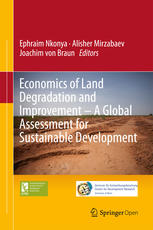 A new book, edited by Ephraim Nkonya, Alisher Mirzabaev, and Joachim von Braun, deals with land degradation, which is occurring in almost all terrestrial biomes and agro-ecologies, in both low and high income countries and is stretching to about 30% of the total global land area. About three billion people reside in these degraded lands. However, the impact of land degradation is especially severe on livelihoods of the poor who heavily depend on natural resources. The annual global cost of land degradation due to land use and cover change (LUCC) and lower cropland and rangeland productivity is estimated to be about 300 billion USD. Sub-Saharan Africa (SSA) accounts for the largest share (22%) of the total global cost of land degradation. Only about 38% of the cost of land degradation due to LUCC – which accounts for 78% of the US$300 billion loss – is borne by land users and the remaining share (62%) is borne by consumers of ecosystem services off the farm. The results in this volume indicate that reversing land degradation trends makes both economic sense, and has multiple social and environmental benefits. On average, one US dollar investment into restoration of degraded land returns five US dollars. The findings of the country case studies call for increased investments into the rehabilitation and restoration of degraded lands, including through such institutional and policy measures as strengthening community participation for sustainable land management, enhancing government effectiveness and rule of law, improving access to markets and rural services, and securing land tenure. The assessment in this volume has been conducted at a time when there is an elevated interest in private land investments and when global efforts to achieve sustainable development objectives have intensified. In this regard, the results of this volume can contribute significantly to the ongoing policy debate and efforts to design strategies for achieving sustainable development goals and related efforts to address land degradation and halt biodiversity loss.
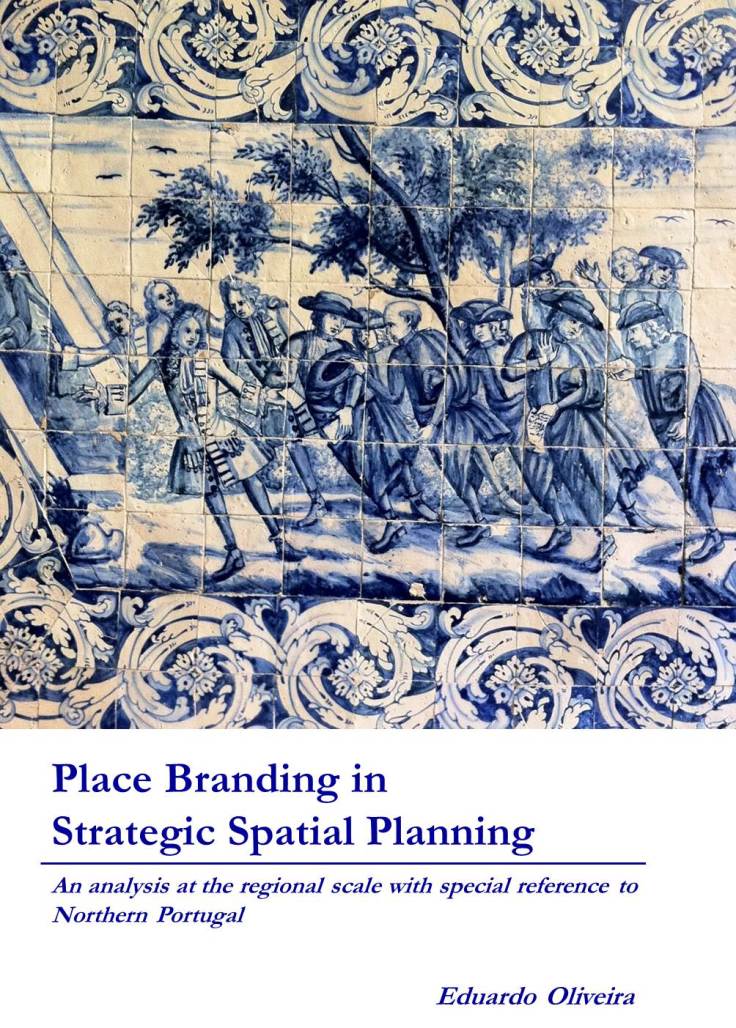 This PhD thesis brings together the strategic spatial planning approach and place branding, specifically at the regional scale. It critically scrutinizes the actual or potential roles of place branding as an instrument for the attainment of strategic spatial planning goals. This discussion is currently gaining particular momentum at a time when the application of branding techniques and principles to places has been firmly positioned on the agendas of local and regional governments. Place branding has also become an increasingly appealing topic for academic research. The theoretical assumption postulated in this thesis is that place branding could and perhaps should be integrated into strategic spatial planning, independent of the geographical scale of application and whether the place branding initiatives are novel or a re-branding exercise. This thesis investigates the empirical significance of a regional branding strategy for northern Portugal, integrated into wider strategic spatial planning, and its ability to overcome the entrenched regional, economic and social difficulties and imbalances. To achieve this aim, a qualitative methodology is employed, specifically involving a content analysis of strategic spatial plans, development plans, strategic initiatives, and online traveller-generated content. Sixteen regional actors with a stake and expertise in the region are also interviewed. By drawing the attention of readers – academics, practitioners, policy makers and spatial planners – to place branding as a strategic spatial planning instrument, this thesis contributes to the theoretical underpinnings of place branding, helping to make it more effective, efficient, and socially and environmentally responsible.
 This paper explores the role of place branding, specifically at the regional scale, as an instrument for the attainment of strategic spatial planning goals. It aims to contribute to the academic debate on place branding by discussing its relevance and effectiveness in supporting economic and social spatial realignment through civic participation and the shaping of clearly envisioned agreed futures.
 International Institute for Innovation in Governance